Most people think concrete is just concrete. Gray, heavy, and boring. But the reality? Concrete is the second most widely used material in the world, right after water. And it comes in far more varieties than the average person realizes.
Pick the wrong type for your project, and you’re looking at cracking, structural failure, or a finish that just doesn’t hold up. Pick the right one, and you’ve got something that lasts decades, looks sharp, and performs exactly as intended.
Here’s what we’ll cover:
- The most common types of concrete and what they’re actually built for
- Structural vs. decorative concrete: what’s the difference and why it matters
- Specialty mixes (high-strength, lightweight, polymer, and more)
- How to choose the right type for your specific project
- Where decorative and custom concrete fits into residential and commercial spaces
- Pro tips for getting the best results from your concrete investment
If you’re in South Florida and thinking about a concrete project for your home or business, the team at Koncrete Art has been crafting custom concrete pieces for over a decade. From polished floors to one-of-a-kind countertops, they know their mixes. But first, let’s break down the fundamentals.
The Most Common Types of Concrete
Before you pick a mix, you need to understand what’s out there. Concrete isn’t one-size-fits-all. Each type has a specific job, a specific strength, and a specific reason it exists.
Here’s a breakdown of the types you’ll actually encounter.
Normal Strength Concrete
This is the one most people picture when they hear the word “concrete.” It uses a standard mix ratio of 1:2:4 (one part cement, two parts aggregate, four parts water). It sets in 30 to 90 minutes, depending on the weather and humidity.
It works well for:
- Pavements and sidewalks
- Basic residential construction
- Structures that don’t face heavy tensile stress
The catch: it doesn’t hold up well against vibrations or wind loading. So for anything structural that needs to flex or bear dynamic loads, you’ll need something stronger.
Plain (Ordinary) Concrete
Plain concrete uses the same 1:2:4 mix as normal strength, but with zero reinforcement added. No rebar, no mesh, nothing.
It’s durable, long-lasting, and perfectly adequate for low-stress applications. Dam construction is a classic use case here, because dams need mass and durability, not tensile flexibility.
Best for: Pavements, walkways, and non-load-bearing structures.
Reinforced Concrete
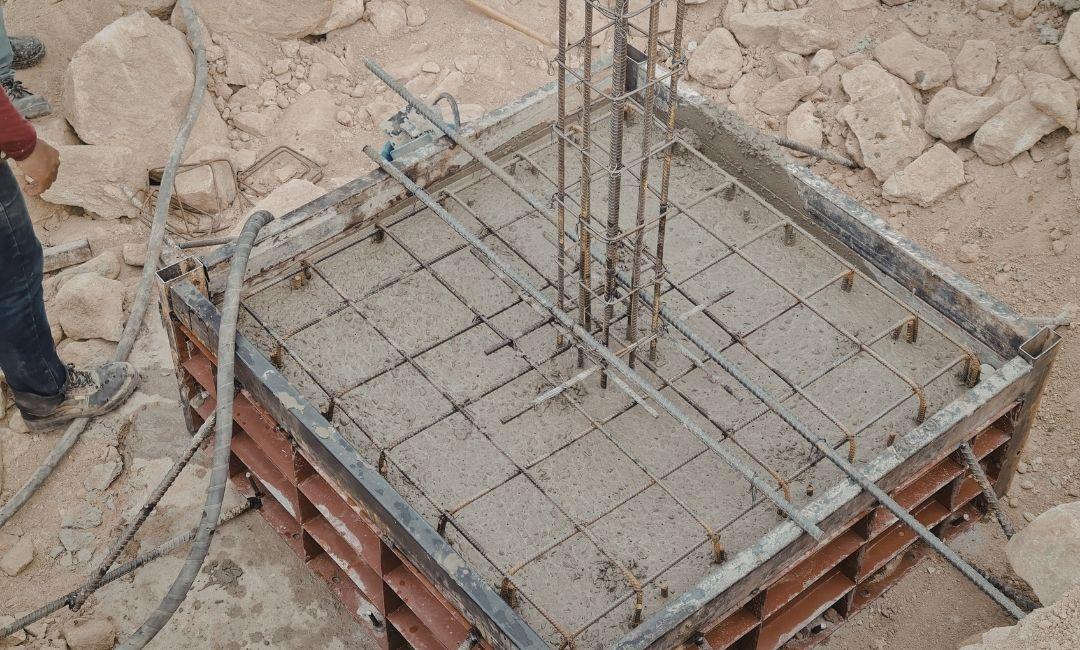
This is arguably the most important type in modern construction. Steel rods, bars, mesh, or fibers are embedded into the mix before it sets. The steel handles tensile forces. The concrete handles compression. Together, they create a composite that can take on serious structural demands.
You’ll find reinforced concrete in:
- High-rise buildings
- Bridges and overpasses
- Roads and highways
- Foundations for commercial structures
Pro tip: The strength of reinforced concrete depends heavily on the PSI rating of the mix plus the grade and placement of the rebar. Getting either wrong is a costly mistake.
Prestressed Concrete
Think of prestressed concrete as reinforced concrete taken a step further. Steel tendons are tensioned before the concrete is poured around them. Once the concrete hardens and the tension is released, the steel puts the concrete into compression, dramatically increasing its load-bearing capacity.
It’s used primarily in large-scale, heavy-load projects:
- Bridges with long spans
- Heavy roof structures
- Flyovers and elevated roadways
This is specialist territory. You won’t see it on a residential project.
Ready-Mix Concrete
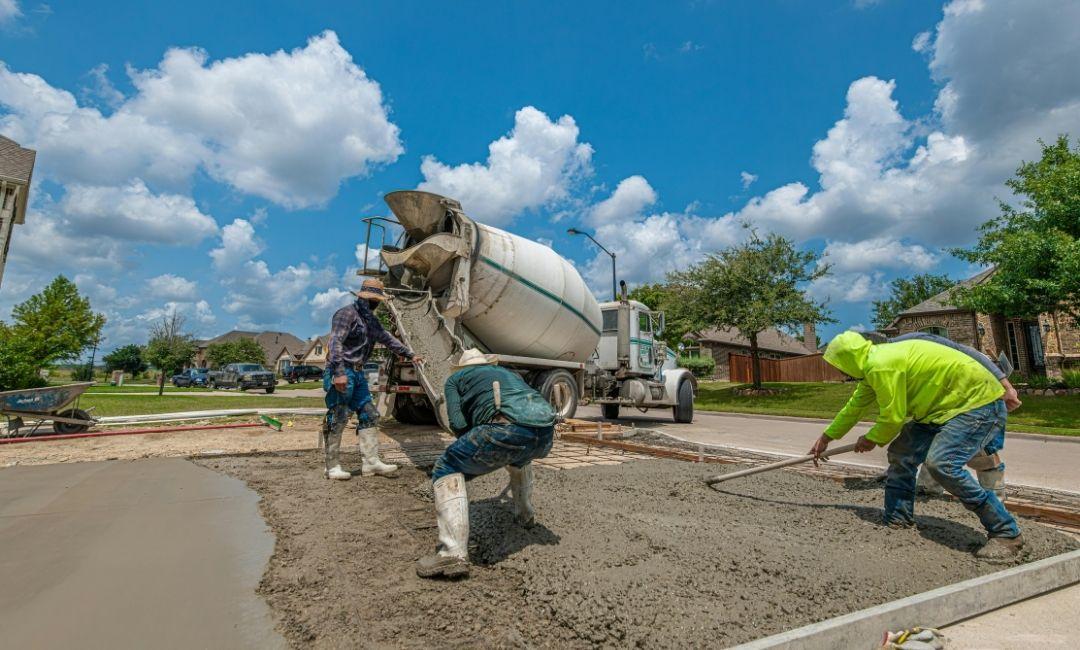
Ready-mix is less about composition and more about how it’s made and delivered. It’s batched at a central plant to precise specifications and transported to the job site in those rotating drum trucks you’ve seen on the highway.
The advantage is consistency. Every batch is mixed under controlled conditions, which reduces human error on-site significantly.
Common applications: Large commercial pours, infrastructure projects, and any job where on-site mixing would be impractical or imprecise.
Pro tip: Ready-mix has a working window. Once it leaves the plant, you’re on the clock. Most mixes need to be placed within 90 minutes of batching.
Lightweight Concrete
Lightweight concrete swaps out standard aggregates for lighter materials like pumice, perlite, or expanded shale. The result is a mix with a density below 1,920 kg/m³, compared to normal concrete’s roughly 2,300 kg/m³.
It’s not a structural workhorse. Its value lies in:
- Reducing dead load in buildings
- Thermal insulation around pipes and steel structures
- Long-span bridge decks and building blocks
High-Strength Concrete
Any concrete with a compressive strength of 6,000 PSI or higher falls into this category. Achieving that requires a lower water-to-cement ratio, high-quality aggregates, and often the addition of superplasticizers to keep the mix workable.
Where you’ll see it:
- High-rise buildings with extreme compressive loads
- Industrial floors and heavy machinery bases
- Infrastructure projects requiring corrosion resistance
Stamped Concrete
Stamped concrete uses patterned molds pressed into the surface while the mix is still pliable. The result mimics natural materials like slate, brick, wood, or flagstone, at a fraction of the cost.
It’s widely used for:
- Patios and pool decks
- Driveways
- Interior flooring
- Commercial walkways
Stamped concrete is one of the most popular decorative concrete options on the market right now. It delivers the visual appeal of premium materials with the long-term durability of concrete.
A Quick Reference: Common Concrete Types at a Glance
| Concrete Type | Key Feature | PSI Range | Best Use Cases | Residential or Commercial |
|---|---|---|---|---|
| Normal Strength | Standard 1:2:4 mix | 2,500–3,500 | Sidewalks, patios, basic builds | Residential |
| Plain (Ordinary) | No reinforcement | 2,500–3,500 | Pavements, walkways, dams | Both |
| Reinforced | Steel rebar or mesh added | 3,500–5,000 | Bridges, foundations, high-rises | Both |
| Prestressed | Pre-tensioned steel tendons | 5,000–6,000+ | Long-span bridges, heavy roofs | Commercial |
| Ready-Mix | Plant-batched, truck-delivered | Varies by spec | Large pours, infrastructure | Both |
| Lightweight | Low-density aggregates | 2,500–3,500 | Bridge decks, insulation, blocks | Commercial |
| High-Strength | Low water-to-cement ratio | 6,000–14,000+ | High-rises, industrial floors | Commercial |
| Stamped | Patterned surface finish | 3,500–4,500 | Patios, driveways, pool decks | Residential |
What About Decorative Concrete?
Most guides stop at the structural stuff. But for homeowners and businesses thinking about countertops, flooring, sinks, or fire pits, the decorative category is where the real conversation starts.
Decorative concrete is engineered for beauty as much as function. It can be polished, stained, stamped, pigmented, and hand-sculpted into virtually any form. It’s not poured and forgotten. It’s crafted.
That’s exactly what the team at Koncrete Art specializes in. Whether it’s a custom concrete countertop for a kitchen remodel or polished concrete flooring for a commercial space in Fort Lauderdale, the mix is designed specifically around the finished product’s aesthetic and functional demands.
Structural vs. Decorative Concrete: What’s the Difference
People often treat these two categories as the same thing. They’re not. Mixing them up is how you end up with a beautiful countertop that cracks under load, or a structural wall that looks like a construction site forever.
Here’s the core distinction in plain terms.
Structural Concrete: Built to Bear Loads
Structural concrete is designed with one primary goal: strength. It’s the backbone of concrete structures like buildings, bridges, and structural foundations. The mix design prioritizes compressive strength, tensile strength, and long-term durability over anything visual.
This is where reinforced concrete, prestressed concrete, and high-performance concrete live. Steel reinforcement and precise Portland cement ratios aren’t optional here. They’re calculated down to the last gram. The concrete needs to withstand heavy loads, dynamic forces, and decades of stress without compromise.
Common structural applications:
- Tall buildings and high-rise construction
- Bridges and long-span bridge decks
- Underground structures and concrete dams
- Wall panels and structural foundations
- Industrial floors built to withstand heavy traffic
Structural concrete is engineered, not eyeballed. The mix design is tied directly to load calculations, soil conditions, and local building codes. Always work with a licensed structural engineer on any load-bearing application.
Decorative Concrete: Built for Beauty and Function
Decorative concrete starts from the same foundation as conventional concrete, but the mix design, finishing techniques, and surface treatments are optimized for visual impact. It can be pigmented during the mixing process, stamped with patterns, polished to a glass-like sheen, or acid-stained into rich, layered color.
The key point: decorative concrete doesn’t sacrifice durability. It’s still a tough, long-lasting building material. It just looks far better than plain or ordinary concrete.
Common decorative applications:
- Countertops and concrete sinks
- Interior floors and polished surfaces
- Patios, pool decks, and driveways
- Custom furniture and fire pit surrounds
- Commercial lobbies and reception spaces
Where the Line Blurs: Architectural Concrete
There’s a middle category worth knowing about: architectural concrete. It delivers both structural function and aesthetic finish in one. Think exposed aggregate facades on a commercial building, or board-formed walls in a luxury home. It does the structural job, but it’s also intentionally beautiful.
| Category | Primary Goal | Key Features | Typical Projects |
|---|---|---|---|
| Structural | Strength and load capacity | Steel reinforcement, high PSI | Bridges, foundations, high-rises |
| Decorative | Aesthetics and finish | Pigment, stamps, polish, texture | Countertops, floors, patios |
| Architectural | Both | Exposed finishes with structural integrity | Building facades, feature walls |
The takeaway? Know what your project actually demands before choosing a mix. A patio doesn’t need bridge-spec concrete. And a load-bearing column doesn’t need to look pretty.
Specialty Concrete Mixes You Should Know
Beyond the standard types, there’s a whole world of specialty concrete mixtures engineered for very specific conditions. These aren’t obscure lab experiments either. You’ll find them on real construction projects every day.
Fiber Reinforced Concrete (FRC)
Instead of relying solely on steel reinforcement, fiber-reinforced concrete incorporates steel fibers, glass fibers, or synthetic fibers directly into the concrete mix. These fibers are distributed throughout the mix during the mixing process and dramatically improve tensile strength, crack resistance, and impact performance.
Three main fiber types:
- Steel fibers: Highest tensile strength, used in industrial floors and heavily loaded structures
- Glass fibers (glass aggregates): Excellent for decorative and architectural applications, lighter weight than steel
- Synthetic fibers: Polypropylene or nylon, ideal for reducing plastic shrinkage cracks during cement hydration
Fiber-reinforced concrete is especially popular in decorative concrete work because it allows for thinner sections without compromising strength. That’s a big deal for custom countertops, concrete sinks, and wall panels where weight matters.
Polymer Concrete
In polymer concrete, the traditional Portland cement binder is replaced with a polymer resin such as epoxy, polyester, or acrylic. The result is a concrete mix with superior chemical resistance, faster set times, and excellent adhesion properties.
Key characteristics:
- Higher tensile strength than normal concrete
- Strong resistance to corrosion and chemicals
- Used in swimming pools, sewer structures, and drainage channels
Polymer concrete sets quickly and bonds well to existing surfaces, which makes it a go-to for repair work on a construction site where downtime is expensive.
Self-Compacting Concrete (SCC)
Also called self-consolidating concrete, this specialty mix flows and consolidates under its own weight without mechanical vibration. That’s a significant shift from conventional concrete placement. It was developed in the 1980s in Japan specifically to address problems caused by poor compaction in densely reinforced structures.
Self-compacting concrete is ideal when:
- Formwork is complex or tightly reinforced
- Access for vibrators is limited
- A superior, void-free surface finish is required
The tradeoff is cost. SCC mixes typically include superplasticizers, fine aggregates in tighter gradations, and often supplementary materials like fly ash. But for intricate precast concrete elements and architectural work, the investment is worth it.
Pervious Concrete
Pervious concrete is specifically designed to let water pass through it. By eliminating or sharply reducing fine aggregates in the mix design, the concrete forms an interconnected void structure (typically 15 to 20% void content) that allows stormwater to drain directly through the surface.
Best for:
- Parking lots and driveways with drainage concerns
- Sidewalks in stormwater management zones
- Eco-sensitive construction projects
It also reduces the urban heat island effect by allowing moisture to evaporate from the subsurface rather than baking on an impermeable surface.
Air Entrained Concrete
During the mixing process, a specialized air-entraining agent is introduced to the mix. This creates millions of tiny air bubbles uniformly distributed throughout the concrete. Those tiny air bubbles give water somewhere to expand when it freezes, dramatically reducing freeze-thaw damage.
In South Florida’s warm climate, air-entrained concrete is less of a necessity. But for clients with properties in northern states or colder climates, it’s essentially non-negotiable for any exterior application.
Rapid Strength Concrete
Rapid-set concrete is formulated to reach workable strength in just a few hours rather than the standard 28-day curing cycle. Higher cement content and specialized admixtures accelerate cement hydration, getting the surface back in service fast.
It’s not a substitute for standard concrete in structural applications. Its primary role is in non-structural concrete jobs like repairs, patching, and post settings, where speed matters more than ultimate compressive strength.
Vacuum Concrete
In vacuum concrete, excess water is removed from the freshly placed mix using vacuum mats and a pump system before the concrete sets. By eliminating water that isn’t needed for cement hydration, the final product is denser, stronger, and reaches usable strength significantly faster than normal strength concrete.
The compressive strength of vacuum concrete is roughly 25% higher than that of an equivalent non-vacuum mix. It’s used where rapid turnaround is critical, like precast factory operations where forms need to be reused quickly.
Glass Concrete
Glass concrete incorporates recycled glass as part of the aggregate in place of standard coarse aggregate. The glass aggregates can be transparent, colored, or mixed, creating a visually striking finish when the surface is ground or polished.
It’s used where decorative impact matters as much as performance. Large-format floor slabs, countertops, and feature walls all benefit from glass concrete’s unique visual depth. It also makes use of recycled glass that would otherwise end up in a landfill, which is a practical sustainability benefit.
Roller Compacted Concrete
Roller-compacted concrete uses the same basic ingredients as normal concrete but with far less water and no fine aggregates, creating a very stiff mix. It’s placed and compacted by heavy rollers rather than traditional forming and vibration methods.
The result is a strong, dense slab used almost exclusively in heavy-duty infrastructure:
- High-traffic roads and highways
- Airport runways
- Dam construction (build concrete dams efficiently and economically)
- Industrial yard pavements
Pumped Concrete
Pumped concrete is specifically formulated to be fluid enough to move through pump hoses to upper levels of a building or hard-to-reach areas on a construction site. It uses a higher proportion of fine and coarse aggregates calibrated for flowability, along with enough water to make it pumpable without sacrificing strength.
It’s the go-to for high-rise construction where transporting wet concrete vertically via crane is impractical.
Foamed Concrete
Foamed concrete is an ultra-lightweight mix made by introducing a stable foam into the cement slurry. The result has a density as low as 400 kg/m³, compared to normal concrete at around 2,300 kg/m³. That extreme lightness comes at the cost of structural strength, so foamed concrete isn’t a load-bearing material.
Its value is in:
- Better thermal insulation in wall cavities and floors
- Void filling and geotechnical backfill
- Non-structural screed layers over structural foundations
Lime Concrete
Lime concrete substitutes portland cement with lime as the hydraulic cement binder, producing a mix that is breathable, flexible, and far more environmentally friendly than conventional concrete. It can absorb carbon dioxide during the curing process, which gives it a genuinely lower carbon footprint.
It’s most often used in the restoration of historic buildings, where modern dense concrete would trap moisture and cause long-term damage to original masonry.
Fly Ash Concrete
Fly ash is a byproduct of coal combustion that can replace a portion of Portland cement in the mix. The result is a denser, lower-permeability concrete with improved long-term compressive strength. The mixing process is similar to standard concrete, but the fly ash replaces 15 to 30% of the cement content.
Benefits include:
- Reduced concrete cost
- Lower carbon footprint
- Better resistance to sulfate attack and chemical exposure
Specialty Mixes at a Glance
| Mix Type | Key Feature | Best Application |
|---|---|---|
| Fiber Reinforced | Steel or glass fibers added | Industrial floors, decorative pieces, thin sections |
| Polymer | Resin replaces cement | Swimming pools, chemical-resistant surfaces |
| Self Compacting | Flows under its own weight | Dense reinforcement, precast elements |
| Pervious | High void content, drains water | Driveways, parking lots, eco-paving |
| Air Entrained | Tiny air bubbles resist freeze-thaw | Exterior concrete in cold climates |
| Rapid Strength | Sets in just a few hours | Repairs, post settings, fast turnaround jobs |
| Vacuum Concrete | Excess water removed pre-set | Precast production, high-strength slabs |
| Glass Concrete | Recycled glass aggregates | Decorative floors, countertops, and feature walls |
| Roller Compacted | Compacted by heavy rollers | Roads, dams, industrial yards |
| Pumped Concrete | High flowability for hose delivery | High-rise construction, elevated pours |
| Foamed Concrete | Ultra-lightweight foam mix | Thermal insulation, void filling |
| Lime Concrete | Lime replaces Portland cement | Historic restoration, eco builds |
| Fly Ash | Fly ash replaces a partial cement | Durable slabs, sustainable builds |
How to Choose the Right Concrete Mix
The right concrete mix for your project comes down to five core factors. Work through each one, and the answer will usually become obvious.
1. What Loads Will It Carry?
This is the first question. Every concrete decision flows from it.
- Light foot traffic only (patios, walkways): 2,500 to 3,000 PSI normal strength concrete is adequate
- Vehicle traffic (driveways, parking areas): 3,500 to 4,000 PSI
- Heavy loads (commercial floors, RV pads, equipment bases): 4,000 to 5,000 PSI
- Structural foundations and heavy-loaded structures: 4,000 PSI minimum, often higher per engineer spec
- High-rise construction and infrastructure: high-strength concrete at 6,000+ PSI
If your project involves any kind of load-bearing function, get an engineer involved. This is not a corner to cut.
2. What Are the Environmental Conditions?
Concrete behaves differently depending on where it lives.
- Freeze-thaw cycles: Use air-entrained concrete for any exterior application in cold climates
- Constant moisture or chemical exposure: Consider polymer concrete or fly ash concrete for better resistance
- Stormwater management areas: Pervious concrete lets water drain without causing runoff issues
- Extreme heat (outdoor South Florida applications): Sealing and UV-stable finishes matter as much as the mix itself
3. Does the Finish Matter?
For structural foundations buried underground? No. For everything else in a home or business? Absolutely.
- You want a natural stone or wood look: Stamped concrete, potentially over a standard base mix
- You want a glossy, modern finish: Polished concrete with a high-quality mix design and grinding process
- You want color integrated into the slab: Pigmented concrete added during the mixing process
- You want something truly one-of-a-kind: Custom decorative concrete designed from scratch around your vision
This is where working with a specialist versus a general contractor makes a genuine difference. The mix design for a polished concrete floor is not the same as the mix poured for a parking lot, even if both look gray on paper.
4. What’s the Project Timeline?
- Standard projects: Normal concrete or ready-mix works fine with a standard 28-day cure
- Fast turnaround needed: Rapid set concrete reaches workable strength in just a few hours
- Large, high-volume pours: Ready-mix with volumetric concrete trucks ensures consistent delivery and placement without delays
- Complex or intricate formwork: Self-consolidating concrete fills difficult molds without vibration, saving labor time
5. What’s the Budget?
Higher spec concrete costs more, but under-specifying costs more in the long run through repairs, replacement, and structural failure.
A smart rule of thumb:
- Don’t over-specify where it doesn’t matter. A 6,000 PSI high-performance concrete mix on a garden path is overkill and a waste of money
- Don’t under-specify where it counts. A 2,500 PSI mix under a commercial kitchen countertop will fail under thermal cycling and impact loads
- Always factor in finishing costs. For decorative work, the mix is only part of the budget. Sealing, polishing, and specialty finishes add to the total but dramatically increase the lifespan and visual value
Where Decorative Concrete Fits: Residential and Commercial Spaces
Here’s where the different types of concrete we’ve covered start to come together in a way that actually matters for homes and businesses.
Decorative and custom concrete isn’t a niche product anymore. It’s become the preferred choice for homeowners and commercial designers who want the durability of concrete with a finish that looks like it belongs in a design magazine.
In the Home
The residential applications for custom concrete have expanded well beyond the patio. Today’s homeowners are using it throughout the house, often as a deliberate design statement.
Popular residential applications:
- Kitchens: Custom concrete countertops offer heat resistance, unique color options, and a seamless look that granite and quartz simply can’t replicate
- Bathrooms: Concrete sinks and concrete showers create a cohesive, spa-like aesthetic that feels both modern and timeless
- Living areas: Polished concrete flooring throughout a home reduces allergens, is easy to clean (a massive bonus for pets), and actually lowers indoor temperatures, a relevant benefit if you’re anywhere in South Florida
- Outdoor spaces: Concrete fire pits and concrete benches turn a backyard into an outdoor living room that withstands the elements for decades
The mix design for each of these applications is different. A sink has different structural and finishing demands than a floor, which has different demands than a fire pit. Getting that right requires experience, not guesswork.
Pro tip: One of the most underrated benefits of concrete in residential spaces is thermal mass. Polished concrete floors absorb heat during the day and release it at night, which can meaningfully reduce energy costs in warm climates.
In Commercial Spaces
Commercial concrete applications demand even more from the material because the traffic loads, cleaning protocols, and aesthetic expectations are all higher.
The team at Koncrete Art works across South Florida’s commercial sector, delivering concrete solutions that handle both the design brief and the operational demands of a working business.
Where commercial clients are using custom concrete right now:
- Restaurants and hospitality: Concrete bar tops, reception counters, and feature walls create a high-end, industrial-modern look that photographs beautifully and holds up to daily commercial use
- Retail spaces: Polished concrete flooring is the standard in premium retail. It’s low-maintenance, withstands heavy traffic, and gives any space a clean, elevated feel
- Office lobbies: A custom concrete design in a commercial lobby makes an immediate impression. It signals quality before a single word is spoken
- Outdoor commercial areas: Concrete tables and seating for restaurants, hotels, and public spaces in cities like Fort Lauderdale, Miami, and Boca Raton need to handle Florida’s heat, humidity, and constant use
The different types of concrete finishes available today mean there’s no reason to settle for standard gray. Whether it’s acid-stained, pigmented, or ground and polished, decorative concrete adapts to any design direction a business is headed.
The Bottom Line on Custom Concrete?
The right concrete mix for a home kitchen countertop is a carefully engineered blend of fine aggregates, pigment, fiber reinforcement, and a precision-mixed portland cement base. The right mix for a commercial floor is different again. And the right mix for a custom outdoor fire pit is different from both.
What stays constant is the need for a contractor who understands not just how to pour concrete, but how to design with it. That’s the difference between a slab and a statement.
Build Something Beautiful with Koncrete Art
Not all concrete is the same, and now you know exactly why that matters. From normal strength concrete and prestressed concrete to polymer concrete and glass concrete, the right concrete mix makes the difference between a project that lasts and one that doesn’t.
Key takeaways:
- Structural concrete prioritizes compressive strength and tensile strength; decorative concrete prioritizes finish and form
- Specialty concrete mixtures like self-compacting concrete, fiber-reinforced concrete, and pervious concrete exist for specific performance needs
- PSI requirements vary significantly across residential and commercial applications
- The mixing process, mix design, and choice of fine and coarse aggregates all directly impact concrete’s strength
- Decorative concrete delivers beauty and durability across countertops, floors, sinks, showers, and outdoor spaces
- Choosing the right concrete mix for your construction project requires considering loads, environment, finish, timeline, and budget
South Florida has no shortage of concrete contractors, but few approach it the way Koncrete Art does. Every piece is handcrafted to your exact vision, whether it’s a polished floor in a Miami restaurant or a custom countertop in a Boca Raton kitchen. If you’re ready to turn concrete into something worth talking about, book a consultation with the team.
FAQs
Which is better, OPC 43 or OPC 53?
It depends on the application. OPC 43 works well for general construction like concrete blocks, plastering, and non-structural work. OPC 53 delivers higher early-age concrete’s strength and suits structural foundations, RCC work, and heavy loaded structures where faster strength gain matters.
What is Type 4 concrete?
Type 4 is a low-heat portland cement designed for massive pours like concrete dams, where excessive heat during cement hydration can cause cracking. It gains strength slowly but produces a dense, durable structure over time.
Which is stronger, PCC or RCC?
RCC (Reinforced Cement Concrete) is significantly stronger. Plain concrete or PCC handles compression well but has poor tensile strength. Adding steel reinforcement to create RCC forms a strong monolithic block that resists both compressive and tensile forces, making it the standard for structural applications.
What are the 7 grades of concrete?
The standard grades are M10, M15, M20, M25, M30, M35, and M40. The number represents the compressive strength in MPa at 28 days. Lower grades suit non-structural work like pathways and concrete blocks; higher grades are used where concrete’s strength is critical, such as columns and beams.
Which grade is best for RCC?
M20 is the minimum recommended grade for RCC work. M25 and above are preferred for structural elements like beams, columns, and slabs that must withstand heavy loads. For foundations in aggressive soil conditions or on challenging rock surfaces and vertical soil applications like retaining walls, M30 or higher is typically specified. Lightweight aggregates can be used in certain RCC applications to reduce dead load without compromising structural performance.