

You spent good money on those stained concrete floors. Now they’re starting to look dull, scratched, or worse, stained in all the wrong ways. Here’s the thing: most floor damage isn’t from heavy use. It’s from improper cleaning.
The good news? With the right care routine, your floors can look showroom-fresh for decades. This guide covers everything you need to know:
- Daily and weekly cleaning techniques
- Products to use (and avoid)
- How to remove tough stains safely
- When to reseal and polish
- Long-term protection strategies
At Concrete Art Design, we’ve been crafting and maintaining custom concrete floors across South Florida for over a decade. We know what keeps them beautiful, and what ruins them fast.
Daily and Weekly Cleaning Techniques
Most stained concrete floors don’t fail because of heavy use. They fail because of lazy cleaning habits. The good news? Keeping your floors pristine takes less effort than you think.
Your Daily Routine (5 Minutes Max)
Daily maintenance is simple: remove anything that could scratch the surface.
Dust, dirt, and grit act like sandpaper under foot traffic. Every step grinds those particles into your finish. Over time, that micro-abrasion dulls the sheen and wears down your sealer.
Here’s what to do:
- Dry mop or dust mop the entire floor using a microfiber pad
- Vacuum high-traffic areas (use a hardwood floor setting, not a beater bar)
- Wipe up spills immediately with a soft cloth or paper towel
Pro tip: Robotic vacuums designed for hardwood floors work great for daily maintenance. Set it and forget it.
The goal is to remove loose debris before it gets ground into the surface. That’s it. No chemicals. No scrubbing. Just a quick pass to keep particles from doing long-term damage.
Weekly Deep Cleaning
Once a week, bring out the mop.
But here’s where most homeowners mess up: they grab whatever cleaner is under the sink. Pine-Sol? Vinegar? Bleach? All of these will destroy your finish over time.
The only cleaner you should use is pH-neutral (6.5-7.0).
Acidic cleaners erode the sealer. Alkaline cleaners strip it. A pH-neutral formula lifts dirt without attacking the protective layer underneath.
| Cleaner Type | pH Level | Safe for Stained Concrete? |
|---|---|---|
| Vinegar | ~2.5 | No |
| Bleach | ~12.5 | No |
| Ammonia | ~11.5 | No |
| Pine-Sol | ~4.0 | No |
| pH-Neutral Cleaner | 6.5-7.0 | Yes |
| Castile Soap (diluted) | ~9.0 | Use sparingly |
Weekly mopping steps:
- Sweep or vacuum first to remove loose debris
- Fill a bucket with warm water and add your pH-neutral cleaner (follow dilution instructions, usually 1 oz per gallon)
- Use a string mop or microfiber mop, wringing out excess water
- Mop in sections, working your way toward an exit
- Let the floor air dry completely before walking on it
Avoid steam mops. The high heat can damage sealers and cause cloudiness. Stick with traditional mopping methods.
Quick-Reference Cleaning Schedule
| Task | Frequency | Tools Needed |
|---|---|---|
| Dust mop/sweep | Daily | Microfiber mop or vacuum |
| Spot-clean spills | As needed | Soft cloth, warm water |
| Damp mop with cleaner | Weekly | String mop, pH-neutral cleaner |
| Check for wear spots | Monthly | Your eyes |
A note on South Florida homes: Humidity and sand tracked in from the beach can accelerate wear on your floors. If you live near the coast, consider a twice-daily sweep during peak seasons. At Concrete Art Design, we often recommend placing floor mats at entryways for our Fort Lauderdale and Miami clients. It’s a small addition that dramatically reduces maintenance.
Products to Use (and Avoid)
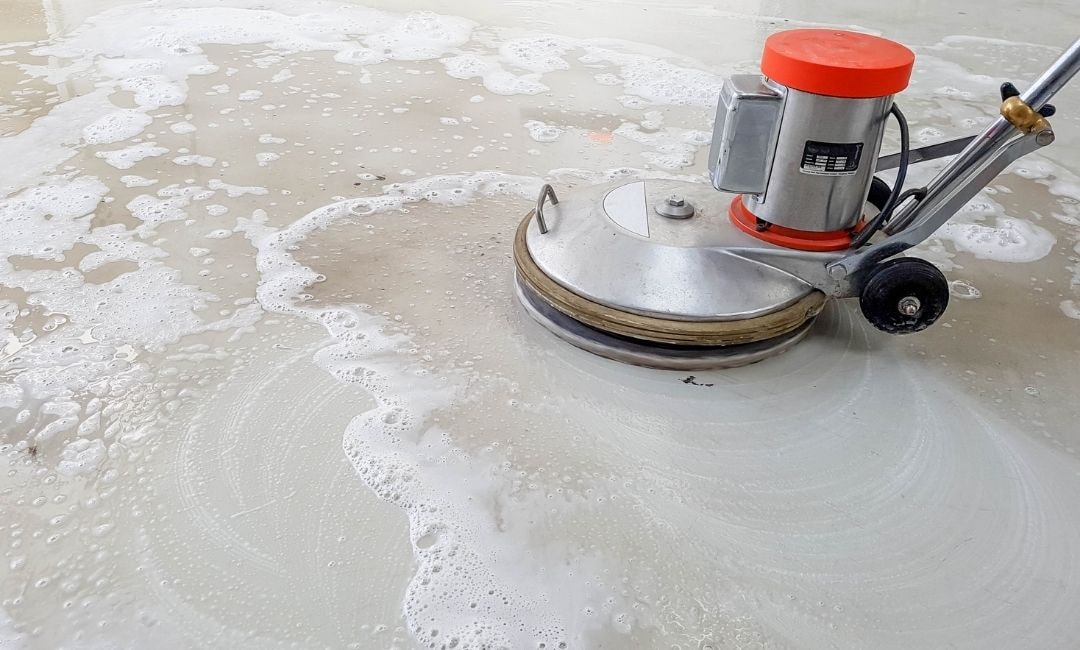
Your cleaning solution can make or break your stained floors. Use the wrong product once, and you might spend the next decade staring at a dull patch where your beautiful finish used to be.
The golden rule for cleaning concrete floors? Stick to pH-neutral cleaners (6.5-7.0).
This isn’t marketing fluff. It’s chemistry. The sealed surface on decorative concrete floors reacts to pH levels. Acidic cleaners etch the sealer. Alkaline cleaners strip it away. Either scenario leaves you with a floor that looks tired, patchy, or permanently damaged.
Recommended Cleaning Products
For day-to-day maintenance, here’s what actually works on indoor concrete floors:
| Product Type | Examples | Best For |
|---|---|---|
| pH-Neutral Floor Cleaners | Zep Neutral pH, Diversey Prominence, Spartan Damp Mop | Weekly mopping on sealed concrete floors |
| Castile Soap (diluted) | Dr. Bronner’s | Light cleaning; use sparingly |
| Specialty Concrete Cleaners | Ameripolish Rejuvenating Cleaner | Polished concrete floors; adds stain resistance |
| Enzyme Cleaners | OdoBan, Paw Sense | Pet accidents, odor removal |
Pro tip:Buy your cleaning products from a janitorial supply house, not big-box stores. You’ll get better formulations at lower prices.
For indoor concrete floor cleaning, dilution matters. Most pH-neutral cleaners are highly concentrated. A typical ratio is 1 oz of cleaner per gallon of water. More isn’t better. Excess product leaves behind a residue that attracts dirt and debris, making your floor look dingy faster.
Products That Destroy Your Finish
This list might surprise you. Many of these are “go-to” cleaners for other floor types. On sealed concrete? They’re a disaster.
Never use these on stained or polished floors:
- Vinegar (pH ~2.5): Etches the sealer and dulls the finish
- Bleach (pH ~12.5): Strips protective coatings and can discolor stain
- Ammonia (pH ~11.5): Damages sealers over time
- Pine-Sol and citrus cleaners (pH ~4.0): Too acidic for sealed surfaces
- Mop & Glo or wax-based cleaners: Creates buildup that clouds polished concrete
- Steam mops: The heat can damage sealers and cause cloudiness
Harsh cleaning products don’t just harm the sealer. They can actually react with the concrete itself, causing permanent etching that no amount of resealing will fix.
Tools That Work Best
The right mop matters as much as the right cleaner.
For residential use:
- Microfiber dust mops for daily sweeping (machine washable, reusable)
- String mops or loop-end wet mops for weekly deep cleaning
- Soft-bristle brushes for spot cleaning
For commercial spaces:
- An automatic floor scrubber speeds up large-area maintenance
- Swing buffers help restore shine on high-traffic polished floors
Skip the sponge mops. They push dirty water into low spots rather than lifting dirt from the floor’s surface. And never use wire brushes on decorative concrete floors. They’ll leave permanent scratches.
One more thing: if you’re dealing with outdoor floors, different rules apply. Pressure washers work well on exterior concrete, but that same pressure can damage sealed interior surfaces. Know your floor type before grabbing any equipment.
How to Remove Tough Stains Safely
Even with a solid cleaning routine, accidents happen. Wine spills. Coffee splatters. Grease drips from the grill pan. The key to protecting your stained floors is acting fast and using the right method for each stain type.
The 30-minute rule: Clean spills within 30 minutes. Concrete is porous. Even with a sealer, liquids can penetrate if left too long. Fresh stains lift easily. Set-in stains become a project.
Oil and Grease Stains
Oil is the trickiest stain to remove stains from because it seeps deep into concrete’s pores. Here’s a method that actually works:
For fresh spills:
- Blot (don’t rub) excess oil with paper towels
- Cover the stain with cat litter or baking soda
- Let it sit overnight to absorb the oil
- Sweep up the absorbent material
- Clean the area with dish soap and warm water using a soft brush
For set-in oil stains:
- Apply a concrete-specific degreaser (alkaline-based)
- Let it soak for 15-20 minutes
- Scrub with a stiff-bristle brush
- Rinse thoroughly and repeat if needed
Pro tip:Baking soda works as both an absorbent and a mild cleaning agent. For stubborn spots, make a paste with baking soda and water, apply it to the stain, cover with plastic wrap, and leave for 24 hours.
For polished concrete, look for enzyme-based oil removers like Ameripolish Microbial Oil-Ingester. These products use microorganisms to “eat” the oil without damaging the smooth surface.
Wine, Coffee, and Beverage Stains
Coffee and wine are tannic acids. They stain fast, but they respond well to the right treatment.
For fresh spills:
- Blot immediately (don’t wipe, which spreads the stain)
- Rinse with warm water
- Scrub gently with dish soap and a soft brush
- Rinse and dry
For dried beverage stains:
- Mix 1 part glycerin to 4 parts water
- Add 2 parts isopropyl alcohol for extra cleaning power
- Saturate a cloth with the mixture and press it onto the stain
- Let it sit for 10-15 minutes
- Rinse thoroughly
For stubborn coffee or wine stains that won’t budge, try a poultice method:
- Mix flour or white powder with hydrogen peroxide to form a paste
- Apply about a 1/4-inch thick layer over the stain
- Cover with plastic wrap and tape the edges
- Wait 24-48 hours
- Remove the dried poultice and rinse
This technique draws the stain out of the concrete rather than pushing it deeper.
Rust Stains
Metal furniture, garden tools, and planters can leave rust marks on outdoor floors and even indoor concrete floor surfaces near entryways.
To remove rust:
- Apply lemon juice directly to the stain
- Let it sit for 10 minutes
- Scrub with a soft brush
- Rinse immediately with clean water
- Neutralize with a baking soda and water mixture
You can also use commercial rust removers designed for concrete. Just test in an inconspicuous area first, and never leave acidic products on sealed concrete floors for extended periods.
Quick Stain Removal Reference
| Stain Type | Best Removal Method | Time Needed |
|---|---|---|
| Fresh oil/grease | Cat litter + dish soap | Overnight |
| Set-in oil | Alkaline degreaser | 20-30 min |
| Wine/coffee (fresh) | Warm water + dish soap | 5-10 min |
| Wine/coffee (dried) | Glycerin solution or poultice | 10 min – 48 hrs |
| Rust | Lemon juice + neutralize with baking soda | 15-20 min |
| Pet accidents | Enzyme cleaner | 10-15 min |
When to Call a Professional
Some stains go too deep for DIY methods. If you’ve tried multiple approaches and the stain persists, or if you notice your sealer looks damaged (white spots, cloudiness, peeling), it’s time to call in the pros.
At Concrete Art Design, we’ve restored floors across South Florida that homeowners thought were beyond saving. From oil-damaged garage slabs to wine-stained patios in Boca Raton, our team knows how to clean and maintain decorative concrete without compromising its finish. Sometimes, a professional deep clean and reseal is all it takes to bring your floors back to life.
When to Reseal and Polish
Your sealed concrete floor won’t last forever without maintenance. The sealer acts as a shield, but foot traffic, UV exposure, and cleaning wear it down over time.
Signs it’s time to reseal:
- Water no longer beads on the surface
- Stained areas appear even after cleaning
- The finish looks dull, patchy, or cloudy
- Stubborn stains penetrate despite quick cleanup
For most residential floors, resealing every 2-3 years keeps things protected. High-traffic commercial spaces may need attention annually. If you apply floor wax as a sacrificial layer, you can extend sealer life significantly.
Polishing refresh: Polished concrete dulls over time. A professional can reburnish the surface with fine-grit abrasives to restore shine without full resealing. This is the best solution for floors that look tired but aren’t damaged.
Pro tip: Never apply paint or new sealer over a dirty floor. Use mild dish soap and water to remove debris first. Let it dry completely. Applying sealer over stubborn dirt locks in imperfections permanently.
Unlike natural stone or tile with grout lines that trap dirt, concrete offers a seamless surface. Regular upkeep and timely resealing keep it looking flawless for decades.
Long-Term Protection Strategies
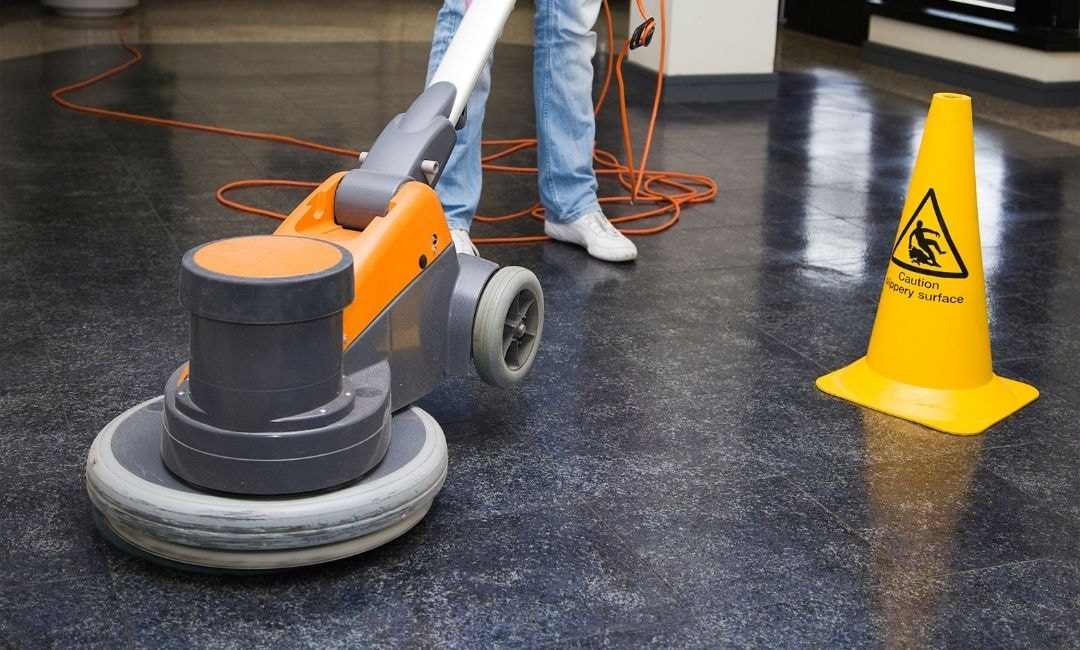
Want to maintain concrete floors that stay beautiful for 20+ years? Prevention beats repair every time.
Protect high-traffic zones:
- Place floor mats at all entryways to remove dirt before it reaches your floors
- Use felt pads under furniture legs to prevent scratches
- Avoid dragging heavy objects across the surface
Establish a simple cleaning routine:
- Sweep daily to prevent streaks and micro-scratches from grit
- Wet mop weekly with pH-neutral cleaner
- Address spills immediately to prevent stains
What to avoid:
- Harsh detergents like a dish detergent and acidic cleaners (no muriatic acid or hydrochloric acid)
- Power washer use on sealed interior floors
- Stiff brush or abrasive scrubbing on finished surfaces
- Using a non-abrasive pad with the wrong cleaning solution
For pet owners: If you have several dogs, enzyme cleaners are your friend. Pet accidents left untreated can permanently damage sealers. Mix water with an enzyme-based cleaner for quick spot treatment.
Concrete is genuinely low-maintenance compared to other flooring options. No grout lines to scrub. No waxing required unless you want extra protection. Just consistent care.
Keep Your Floors Stunning With Concrete Art Design
Caring for stained concrete floors doesn’t require expensive products or complicated routines. The basics matter most: sweep daily, mop weekly with pH-neutral cleaner, clean spills fast, and reseal when needed.
Key takeaways:
- Use only pH-neutral cleaners (6.5-7.0) to protect your sealer
- Avoid vinegar, bleach, ammonia, and harsh detergents at all costs
- Clean spills within 30 minutes to prevent permanent staining
- Reseal every 2-3 years for residential floors
- Use floor mats and felt pads to minimize wear and scratches
Whether you’re installing new decorative concrete or restoring floors that have seen better days, Concrete Art Design has served South Florida homeowners for over a decade. From custom countertops to polished flooring, our team crafts surfaces built to last. Need help with maintenance, resealing, or a complete floor transformation? Give us a call.
FAQs
How often does stained concrete need to be sealed?
Most stained concrete floors need resealing every 2-3 years. High-traffic areas may require annual attention. If water stops beading on the surface, it’s time to reseal.
Can you use Mop and Glo on stained concrete floors?
No. Mop and Glo contains wax that builds up on concrete, creating a cloudy, dull appearance. It can also make resealing difficult. Stick to pH-neutral cleaners designed for sealed concrete.
What cleaner to use on stained concrete floors?
Use a pH-neutral cleaner (6.5-7.0 pH) diluted in water. Brands like Zep Neutral pH or diluted castile soap work well. Avoid acidic or alkaline products like vinegar, bleach, or ammonia.
Do stained concrete floors need to be sealed?
Yes. Sealing protects the stain from fading, moisture damage, and wear. It also makes cleaning easier and prevents spills from penetrating the concrete. Without a sealer, your floors won’t last.


